
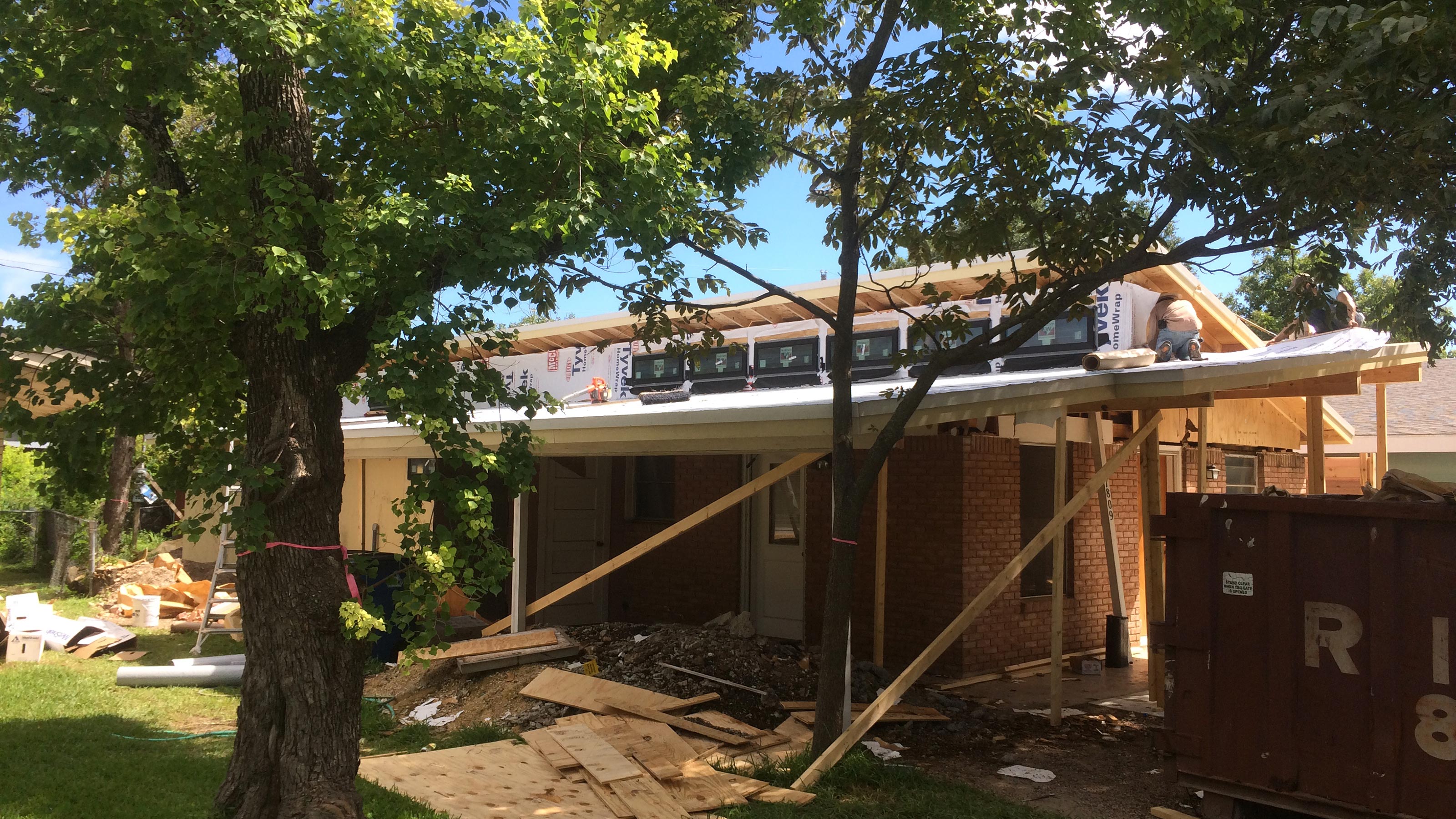
Most remodels don't go off track all at once. They slip gradually, in ways that are easy to rationalize until suddenly you're three months behind and trying to figure out what happened.
The Warning Signs (Before the Obvious Ones)
By the time work has stopped entirely and your GC isn't returning calls, you've already lost significant time. The earlier signals are subtler.
The schedule slips quietly. If your GC tells you A, B, C, and D will be done this week and two weeks later only A is complete, that's not a minor hiccup. It's a pattern. One missed commitment is construction. Four missed commitments is a management problem.
Communication goes thin. A GC who is on top of a project communicates proactively. They tell you what happened this week and what's coming next. When that stops, when you're the one always asking and the answers are vague or delayed, something is wrong.
Nobody is asking for your selections. This one is easy to miss because it feels like the opposite of a problem. Nobody's bothering you. But if your GC isn't asking you to choose finishes at the right points in the project, one of two things is happening: decisions are being made without you, or they're being pushed down the road where they'll stack up into serious delays.
On well-run projects, selections are tied to phases. Demo starts, and you're asked to confirm your tub and window selections. Framing starts, and you're asked to confirm appliances, because your electrician needs to know exactly where outlets go before the walls close. That sequence is intentional. When it doesn't happen, you find out later.
Mistakes get denied rather than fixed. Every project has mistakes. What separates good GCs from bad ones isn't whether mistakes happen. It's what happens next. A GC who acknowledges an error and explains how they'll fix it is operating with integrity. A GC who deflects, blames the plans, or quietly tries to turn their error into your change order is telling you something important about how the rest of the project will go.
The job site stops cycling. Job sites get messy and then get cleaned. That's normal. What isn't normal is junk accumulating over weeks with no cleanup. A site that keeps getting messier without any visible progress is usually pointing to poor management, not just a busy week.
The Sheetrock Test
Here's a quick mid-project diagnostic that cuts through a lot of noise.
Sheetrock going up is roughly the midpoint of most permitted remodels. Not exactly, every project is different, but close enough to be useful.
If your GC told you the project would take six to eight months, it's month five, and sheetrock is just going in now, you're not on track for eight months. You're probably headed for ten. Six months is already off the table.
That single observation, where you are in the project versus where you are in the calendar, tells you more than most conversations with your GC will.
What Delay Actually Costs
The most obvious cost is rent. At Austin rates of $3,000 to $4,000 a month for a comparable home, a two to three month overrun costs $6,000 to $12,000 in housing alone before you factor in storage, disruption, and the compounding stress of an open-ended construction timeline. For most people, $10,000 to $15,000 in total personal costs for a two to three month delay is a reasonable estimate.
But the financial costs aren't the worst part.
When a project is off track, it becomes a second job. You're following up constantly, documenting everything, trying to interpret what's happening and what it means. You're paying a GC significant money to handle all of this, and instead you're the one managing them. That's a particular kind of exhausting — the frustration of paying for a service you're not getting, combined with the anxiety of watching something you care deeply about stall out.
When I fired my GC and work finally started moving again, I felt so much better almost immediately. Suddenly I could see the finish line. That shift is real.
But delay costs don't always stay linear. The real damage often comes from sequencing failures, when a project falls behind and decisions that should have been made weeks ago suddenly have to be made right now, under pressure, with work stalled waiting on the answer.
A freestanding tub is a good example. If nobody confirmed the tub selection before rough plumbing, the drain may be in the wrong location. The GC will point to the plans, which show the drain centered. Your tub has the drain toward the front. Now there's a concrete tunneling job, a rescheduled plumber, and a change order to fix something that should have been coordinated from the beginning. Weeks of work, not days.
I learned this the hard way on my own first remodel. My GC told me I could pay the tunneling crew in full upfront. I did. They never came back to finish the work. That was the primary reason my project sat idle for six months.
Depending on the cause of the delays, many GCs will also try to pass their costs onto you. Extended overhead, remobilization fees, subcontractors who have to reschedule: all of it can show up as change orders that are genuinely your problem now even if they shouldn't be.
What You Can Actually Do
The first move is to start a conversation.
Ask your GC for a rough schedule of upcoming work. What gets done this week, what gets done next week, what's coming after that. A GC who is on top of their project can answer that question without hesitation. A GC who gets vague, defensive, or simply doesn't follow through on providing it is showing you something.
In any case, the act of asking changes the dynamic. Every trade on my projects knows I'm going to be checking their work. My plumbers joke about it. But knowing I'm coming behind them with a tape measure keeps things mostly right the first time. The same principle applies when homeowners pay attention: it signals that someone is watching, and that matters.
Here's the hard truth about a project that's already off track: in almost every case, you're dancing with the one who brought you. Firing or swapping GCs mid-project is difficult, expensive, and rarely faster than working through the problems with the one you have. Your best move is usually to start the conversation, and then keep up the pressure.
That means managing more than you should have to. It means emailing weekly, following up on every commitment, being the squeaky wheel. It's frustrating, and it's not what you signed up for. But it's also the real trade-off when you've chosen a cheaper GC. You can save tens of thousands on the front end with a lower-tier contractor, but you almost always earn those savings back by staying on them throughout the project. The difference between the tiers of GCs in Austin isn't just quality of work. It's how much of your time and energy it takes to get there.
If the conversation doesn't move things and the pressure isn't working, that's the point where it's worth getting an outside read. Not to make any decisions yet, but to understand where things actually stand before you do. If you're mid-project and things feel off, that's exactly what hourly advisory support is for.
The Bigger Picture
A delayed project isn't just about the financial costs. The patterns I mention above, poor scheduling, missed communication, ignored selections, denied mistakes, don't fix themselves. They compound. And the stress creeps into every aspect of your life.
The earlier you flag delays and proactively call them out, the more options you have.
If you're recognizing the warning signs, the right move is to get clarity before you get further behind. The initial consult is designed for exactly this situation — understanding where things actually stand and what your options are.