
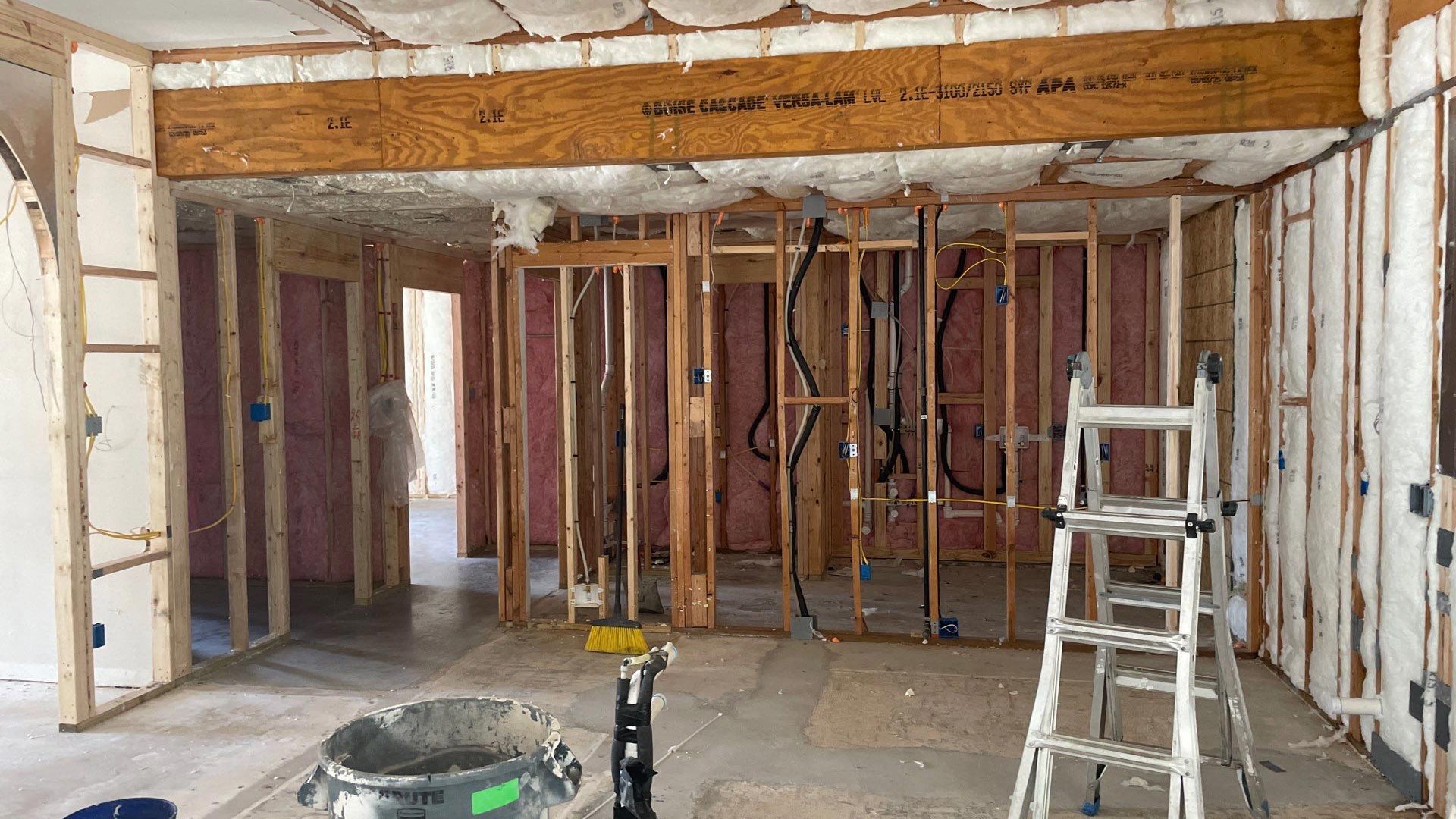
Most budget overruns don't announce themselves. They accumulate quietly: a finish upgrade here, a change order there, an allowance that seemed reasonable until you actually started shopping. By the time the number is undeniable, you're already deep in the project and your options have narrowed.
Here's how it happens, what to do when it does, and how to catch it before it gets worse.
How Remodels Go Over Budget
The causes depend on whether you're working with a GC or managing the project yourself, but the underlying problem is usually the same: the budget didn't reflect what the project actually costs.
With a GC, the most common culprit is allowances.
An allowance is a pool of money set aside in a bid for finish items: appliances, tile, plumbing fixtures, lighting. The problem is that allowances are estimates, and cheaper GCs tend to estimate low. They assume builder-grade finishes, which most clients don't want and often don't realize they're being quoted.
On a recent project, the clients specifically asked for smaller allowances. They went in knowing the numbers were aggressive. Their appliance allowance was $15,000, which is theoretically possible but not if you want higher-end appliances, which they did. They ended up $25,000 over their appliance budget alone. On the other hand, they held firm on their interior door allowance and came in a few hundred under. The discipline was real, just not consistent.
That's how allowances work in practice. When a client doesn't understand what an allowance is, how much it covers, or whether it's realistic for their taste level, they find out at the worst possible time.
Finishes typically account for about 40% of a remodel budget. If you go over allowance on tile, plumbing fixtures, appliances, and lighting, all at once, because selection decisions tend to cluster, you can easily double your finishes costs. That's not a rounding error. That's a project in serious trouble.
When self-GCing, the causes are different but just as real.
The details are easier to miss when you're managing the project yourself and don't have a system built around catching them. Third-party inspections, shower pan costs, sequencing delays that create remobilization fees: none of these are dramatic individually, but they add up fast when you're not tracking them explicitly. The budget that looked solid on paper starts leaking from a dozen small places simultaneously.
The Moment of Realization
How and when you find out depends entirely on your GC's process.
On our projects, clients receive weekly estimated costs at completion: our best current projection based on their most recent selections, change orders, and known variables. They know where they stand every week. There are no surprises at the end because we've been having the conversation throughout.
Most GCs don't work that way.
A friend of mine had an architect managing his project. Sheetrock went in, and then work stopped. When he finally got the architect on the phone, the architect told him they'd run out of money. They had spent 100% of the budget getting to sheetrock, with the entire finish phase still ahead. My friend had to take over the project himself. Years later, parts of his house are still unfinished.
That's the extreme version. But the underlying dynamic, a budget running out without the client knowing until it's too late to course correct, happens more often than people realize. The earlier you see overruns developing, the earlier you can stop the bleeding.
If you're self-GCing, the dynamic is different.
You don't have a GC to have the hard conversation with, no weekly cost projections, no professional keeping score. The upside is more flexibility — no contract constraints, no markup to navigate, and the ability to pause and reassess without a formal process. But the risk is that the full picture is harder to get and easier to miss entirely.
This is exactly where an independent advisor adds real value. If you're self-GCing and starting to feel like the numbers aren't adding up, getting a clear-eyed assessment of where you actually stand before making more decisions is worth more than almost anything else you could spend money on at that point. That's precisely what the initial consult is designed for.
What to Do When You're Over Budget
The worst move is to wait and hope. Costs don't self-correct mid-project. Every week you don't address an overrun is a week you lose the ability to make meaningful choices about how to respond.
The first move is to pause and assess.
Don't make any new decisions, approve any new change orders, or authorize any new scope until you have a clear picture of where you actually stand. That means sitting down with your GC and getting a real current cost projection, not an optimistic one, not a "we'll figure it out" conversation, but an honest number.
From there, the realistic paths are:
Scope reduction. Some things are easier to pull out of a project than others: custom cabinetry, outdoor features, custom millwork. Structural scope like a fireplace or additional bathroom is much harder to remove once work has started, and only really viable very early in the project. The earlier you identify what's cuttable versus what's locked in, the more flexibility you have.
Finish substitution. Lighting and appliances are usually the easiest places to reduce without affecting the structural project. On my own first remodel, I cheaped out on lighting wherever I could and pushed the fireplace back three years. It wasn't ideal, but it got the project finished. The alternative was worse.
Finding more money. A construction loan refinance, a HELOC draw, or simply having additional cash available. This is the path that keeps the original vision intact but requires the financial capacity to execute it.
What determines which options are available is where you are in the project. Early on, scope reduction and finish substitution are both viable. Late in construction, most of the structural cost is already locked in and your options narrow to finish substitution and finding more money.
How to Protect Yourself Before It Happens
Understand your allowances before you sign anything. Know what each allowance covers, how much it is, and whether it's realistic for the finish level you actually want. If you drive a nice car and have expensive taste, a $7,000 tile allowance on a major remodel is not going to cover what you're going to pick. Know that going in.
A well-sized contingency budget is your first line of defense. Not a vague cushion, but a specific amount tied to actual unknowns in your project. And if you went with the lowest bid, your contingency should reflect the gap between that bid and the next one, because that gap is telling you something.
Ask your GC how they communicate budget status during the project. Do they provide regular cost-at-completion updates? If the answer is vague, that's worth pressing on. A GC who can't tell you where your budget stands at any given moment is a GC who will surprise you at the end. Understanding what your bids are actually telling you before you sign is the most important protection you have.
And if you're not sure whether your budget is realistic for your scope in the first place, that's the conversation the initial consult is designed to have, before you're in the middle of a project with fewer options than you started with.