
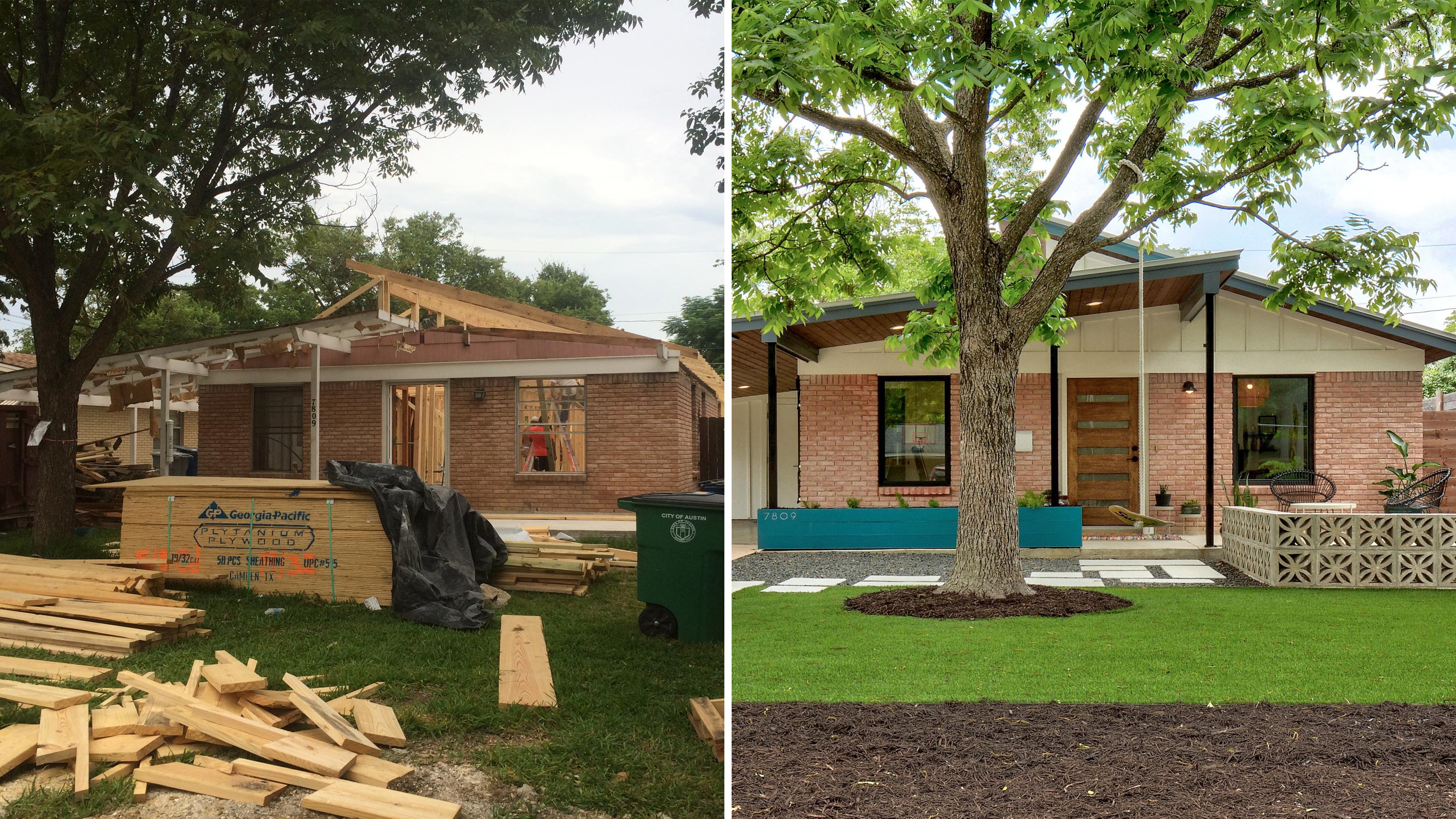
Most homeowners think they have a rough idea. They don't.
Not because they're not smart, but because residential construction pricing is genuinely hard to know unless you're in it every day. Most people do one remodel in their life, maybe two. It's not like filling up a gas tank where you reset your sense of pricing every week. And since COVID, Austin remodel costs have increased substantially. Homeowners just haven't fully adjusted to the new normal.
Here's what things actually cost right now, why the numbers are harder to pin down than you'd expect, and what you should actually do with them.
The Numbers
These are rough Austin market ranges for 2026, based on current GC pricing:
• Remodels: $250 to $350 per square foot of remodeled space
• Additions and new builds: $400 to $550 per square foot of new space
A practical example: a 1,000 square foot remodel at $250 to $350 per square foot runs $250,000 to $350,000. Add a 500 square foot addition at $400 to $550 per square foot and you're adding another $200,000 to $275,000. Combined, that project runs roughly $450,000 to $625,000 with a GC, before finishes, site conditions, or complexity push it higher.
Why Price Per Square Foot Is Like BMI
Price per square foot is useful the same way BMI is useful. It gives you a reasonable population-level estimate, but it also tells you a bodybuilder is obese. Apply it to an individual project without context and it misleads more than it helps.
Here's what actually drives costs within those ranges: finishes, complexity, and structural work. All three. A $250 per square foot remodel and a $350 per square foot remodel can involve identical square footage and identical structural scope. The difference is what's inside the walls and on the surfaces.
I've managed a bathroom remodel that came in over $500 per square foot with zero structural changes and zero complexity. Existing closet systems, existing cabinets, existing layout. The entire premium was finishes.
Which brings up the honest question every homeowner should ask themselves before they look at any number: do you drive a nice car and have expensive taste, or do you price shop and find the practical option? If you like nice things, the ranges above are a starting point. Your actual project will likely land above them. If you're economical by nature, the ranges are a reasonable estimate.
We're starting a project later this year that's over $1,000 per square foot. Same Austin market, same GC rates, completely different finish level.
How Much Have Prices Actually Increased?
My first remodel in 2016 probably would have cost around $225,000 with a real GC. I ended up doing most of the finish out myself and came in around $180,000. Today, the same project with a contractor would run close to $600,000.
That's not a typo.
About 80% of that increase is labor and materials, with materials leading. The rest is time and process. The City of Austin has added permitting hurdles over the years that add real complexity and weeks to projects. What used to take five to six months now takes seven to eight. That's carrying costs, extended rentals, and additional overhead built into every bid. You need to know what permitting actually adds to your timeline and cost, and whether it makes sense.
Prices have stabilized recently, but stabilized at the inflated level. Deflation isn't a real phenomenon in construction. The expectation that prices will meaningfully come down isn't supported by anything happening in the market right now. The new normal is the normal.
The Costs Nobody Budgets For
Beyond the GC bid, there are costs that consistently catch homeowners off guard.
Third party inspections are one. It's not just the City that inspects things. A surveyor to confirm the location of any addition runs around $1,000. A foundation inspection before you pour is around $500. Framing inspection, another $500. Third party wallboard inspections. These aren't optional, and they rarely show up in a homeowner's mental budget before bids arrive. They add up.
Change orders are another. Once construction starts, your plans are the bible. Any deviation from them costs money, and change orders are an easy profit center for some contractors. An extra outlet that costs $15 in parts can easily run $400 once you factor in the electrician's time, running new wire, and the scheduling disruption it creates.
The deeper issue with change orders is that most homeowners don't understand their plans in detail. They expect things that aren't in the scope, or don't realize something they assumed was included wasn't bid. That gap between expectation and contract is where budgets blow up quietly, one change order at a time. Depending on how bids the job and how, a contingency budget could be incredibly important!
What to Do With These Numbers
If you're renovating your entire 2,000 square foot house, you're starting in the $500,000 to $700,000 range. Most homeowners today still think a full 2,000 square foot remodel costs $350,000. It doesn't. Not in Austin in 2026.
Use the ranges as a sanity check, not a budget. If your project is a 1,200 square foot remodel and you're expecting to come in at $200,000 with a GC, something is wrong with either your expectations or your bids. That number is closer to possible if you act as your own GC — but that's a separate conversation with its own set of considerations. If you're at $350,000, you're in the right neighborhood and the conversation can move to what's actually included.
If your bids are coming in higher than expected and you want to understand what the bids include and whether the numbers are realistic, or if there's room to adjust scope without gutting the project, that's exactly the kind of question the initial consult is designed to answer. And if you haven't gotten bids yet, understanding what to look for before you do will save you a lot of confusion when they arrive.