
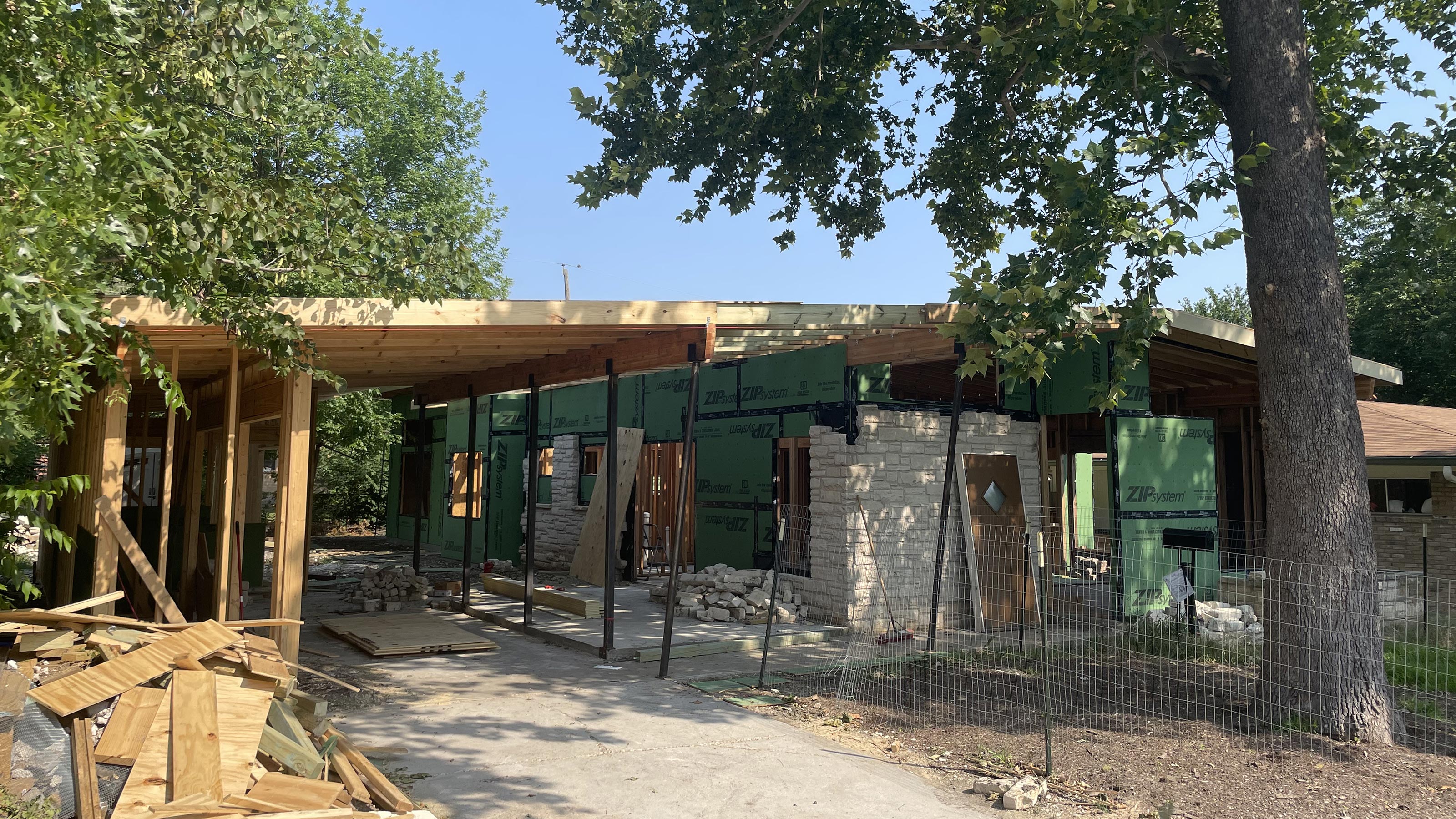
ADU posts are everywhere right now, and most of them lead with the same pitch: build a backyard cottage, earn $2,000 a month, cover your mortgage. The math is rarely done out loud.
Before we get to costs, let's talk about what you actually need, because the answer changes everything.
Start With the Real Question: What Is This For?
Most people considering an ADU in Austin are doing one of two things: setting up space for an aging parent to move closer, or creating a separate home office. A smaller number are genuinely building for rental income.
That distinction matters enormously for cost, permitting, and whether you need an ADU at all.
If you work from home and really just want a dedicated office space, a she-shed, a studio, a quiet room away from the house, you may not need a permitted ADU. In Austin, a structure under 200 square feet with no plumbing doesn't require a permit. That's a meaningfully different project: a well-built 150sf office structure with power and HVAC can be done for $30,000-$60,000 depending on finish level. No permit, no sewer connection, no kitchen, no bathroom.
There's also a middle option worth understanding: prefab or modular structures. These are factory-built units, typically 250-400 square feet, and they're responsible for most of the low cost figures you'll see cited online, $50,000-$150,000. The structure itself can be relatively inexpensive, but those numbers often don't include foundation, utility connections, permits, or site work. A prefab unit used as an unpermitted office with no plumbing is a very different project than a permitted prefab ADU with full utilities. Many people don't realize they're comparing different things when they see those numbers.
The moment you add plumbing, everything changes. Plumbing triggers the permit requirement, which triggers full ADU inspections and compliance, which immediately bumps costs by tens of thousands of dollars. It also changes the scope conversation entirely. A small plumbed ADU may not make financial sense once you factor in all the systems required. At that point, you're often better off going bigger — a larger unit amortizes those fixed costs across more usable space and a stronger rental or resale value.
So before you start getting bids on an ADU, ask yourself: do I actually need plumbing? The answer to that question alone can cut your project cost in half.
ADU Types and What They Actually Cost
If you do need a full ADU, with kitchen, bathroom, and all the systems that entails, there are three main paths, and the cost difference between them is significant. All of them require permits — Austin's permitting requirements apply in full, and the timeline and inspection process is part of the cost equation.
Garage conversion is almost always the cheapest route. The foundation, roof, and exterior walls already exist. You're essentially finishing an interior and adding utilities. A straightforward garage conversion in Austin runs $50,000-$150,000 depending on the garage size, condition, and finish level. The tradeoff is obvious: you're giving up garage space permanently.
Attached ADU shares a wall with the main house. Counterintuitively, this isn't necessarily cheaper than a detached structure. Attaching a second dwelling unit to your home triggers multifamily housing code requirements, including fire-rated assemblies between the units, which can add significant cost to both the ADU and modifications to the existing structure. Costs typically run $150,000-$250,000 but the code upgrade requirements make this path more complicated than it looks on paper.
Detached ADU is the most expensive option and the most flexible. A new structure in the backyard, fully independent, with its own foundation, framing, roofline, and utilities. This is what most people picture when they think "backyard cottage." Most Austin homeowners building a detached ADU go up to the 1,100sf maximum — and a quality stick-built unit at that size with a reputable GC will realistically start at $400,000 and go up from there depending on finishes and site conditions. Lower figures you'll see cited online often reflect smaller units, prefab construction, or bids that don't survive contact with actual construction costs.
The wide range within each category comes down to the same variables as any Austin remodel: finishes, complexity, and site conditions. A basic detached ADU with standard finishes is a very different project than a custom unit with high-end kitchen, spa bathroom, and engineered floors. If you haven't already, understanding what things actually cost to build in Austin right now is a useful baseline before you start pricing an ADU.
The Hidden Cost Most People Miss: Plumbing and Drainage
Here's something almost nobody talks about in ADU cost guides: gravity.
ADUs are typically built at the back of a lot. In older Austin neighborhoods, that can create a drainage problem. The original sewer tap from the 1930s, 40s, or 50s may only be 24 inches deep at the street. If there isn't enough elevation change between the ADU and the sewer connection, gravity won't do its job.
The preferred solution is to raise the ADU's foundation slightly. If the ADU bathroom is 30 feet further from the street than the main house connection, you only need about 3.75 inches of additional height to maintain proper fall. That's a modest foundation cost increase and far simpler than the alternative.
When raising the structure isn't feasible, the fallback is a sump or grinder pump. That adds roughly $5,000 to the project cost, and more importantly, it adds maintenance forever. Pumps fail and require servicing. Gravity doesn't.
There's one more plumbing cost that consistently surprises people. Adding a plumbed ADU increases the total fixture count on your property — sinks, toilets, showers all count. Austin Water sizes meters based on fixture units, and once you cross certain thresholds (roughly three full bathrooms across the combined property), your existing meter may need to be upgraded. If that requires a new tap at the street, you're looking at roughly $25,000 in additional cost. Worth checking before you finalize your plans — Austin has a residential water supply fixture unit calculator on their website that can give you a preliminary read. And if you're working with an architect on your ADU design, having the finish and scope conversation early is especially important given how much these variables affect cost.
What Austin's Rules Actually Require
Austin has become one of the more ADU-friendly cities in Texas. The key rules for 2026:
Maximum size is 1,100 square feet or 15% of your lot area, whichever is smaller. Zoning must be SF-1, SF-2, or SF-3. No minimum parking is required. No owner-occupancy requirement, meaning you can rent both your main house and your ADU. Setbacks are generally 5 feet from the sides and 10 feet from the rear.
Two things worth flagging before you get too far into planning:
Heritage trees. Austin's tree protection rules are strict, and if your planned ADU location is within the critical root zone of a protected tree, you'll need a separate arborist review. This can add time and cost, and in some cases rule out your preferred location entirely.
HOA and deed restrictions. The City may say yes, but private deed restrictions can say no regardless of zoning. Check before you plan.
The Rental Income Reality Check
Most ADU posts tell you that a well-located unit in Austin can rent for $1,800-$2,500 a month. That's probably true. Here's the math they don't show you.
A $250,000 ADU will likely add around $200,000 to your property's assessed value. At Austin's roughly 2% effective tax rate, that's $4,000 more per year in property taxes. Add approximately $100/month for landlord insurance on the rental unit, and you're at $430/month in fixed carrying costs before the mortgage.
If you financed most of the $250,000 build, you're looking at roughly $1,500/month in debt service. Combined with taxes and insurance, your all-in monthly cost is around $2,000.
Renting for $2,000/month is essentially breakeven, before vacancy, before maintenance, before the inevitable repairs. Austin rental rates have flattened recently, so the optimistic projections from a few years ago deserve scrutiny.
The appreciation upside is real. A well-built ADU in a desirable Austin neighborhood should hold its value and appreciate with the market. But if you're building primarily for cash flow, the math is harder than most posts suggest.
The two use cases that actually pencil out financially: housing an aging parent (where the "rent" is avoiding assisted living or a separate mortgage) and a home office (where the value is productivity and quality of life, not rental income).
What to Ask a GC
Any GC who does permitted residential work in Austin can build an ADU, there's nothing inherently more complex about them than a standard addition or remodel. The key qualifier is permitted work. A GC experienced with Austin's inspection and permitting process will move through an ADU efficiently. One who mostly does unpermitted cosmetic work will struggle.
Ask specifically: have you done permitted new construction or additions in Austin? Have you navigated the City's inspection process on a ground-up structure? Those questions tell you what you need to know.
ADU work also happens on a lived-in lot with less space to work and store materials. An experienced GC accounts for that in their schedule and staging plan. A less experienced one treats it like a wide-open new construction site and runs into problems.
The Short Version
If you want an office and don't need plumbing, a sub-200sf structure may be all you need, no permit, fraction of the cost.
If you need a full ADU, garage conversion is cheapest, detached is most flexible, and the cost range is wide enough that finishes and site conditions matter as much as the structure type.
If you're building for rental income, do the math honestly before you commit. Appreciation is the stronger argument than cash flow in Austin right now.
And if you're trying to figure out what type of ADU makes sense for your lot and your use case, that's a good conversation to have before you spend money on plans. That's exactly what the initial consult is for.