
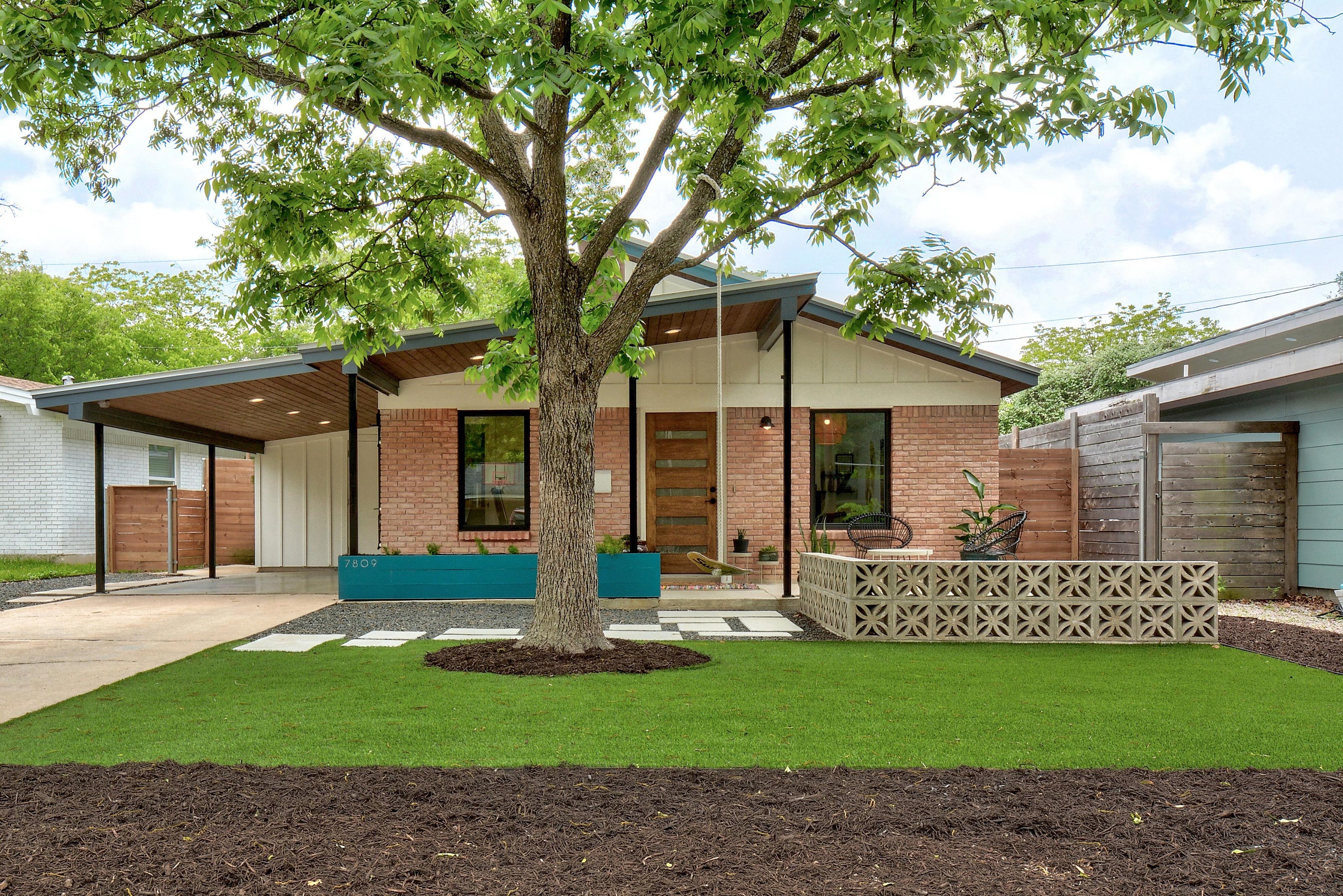
This is the wrong question, or at least an incomplete one.
In Austin, "buying a new house" means one of two things: a really expensive house, or a house that isn't really in Austin. The more useful question is: what kind of house should I be looking for, and what does the math actually look like on fixing it up versus buying something already done?
The Austin Price Reality
Austin's residential real estate market is deeply segmented by location and condition. In the city core, finished homes can approach $1,000 per square foot. In established neighborhoods a bit further out, you're looking at $450-$550 per square foot for finished product, down from the $600-$700 peak in 2023, but still significant. Get further from the core and you can find nice finished homes closer to $300 per square foot.
Those numbers matter because renovation costs are relatively consistent regardless of where the house is. A quality GC-managed remodel in Austin runs $250-$350 per square foot — here's a detailed breakdown of what drives those costs. Which means the math on buying a fixer-upper versus buying something finished looks very different depending on which neighborhood you're in.
The calculation isn't complicated. If finished homes in your target neighborhood are selling for $500 per square foot and you can buy a fixer-upper in the same neighborhood for $300 per square foot, a $250 per square foot renovation still leaves you ahead, and you get exactly the house you want. Run those numbers yourself for any house you're seriously considering. Just make sure your math includes a realistic contingency budget — fixer-uppers have more unknowns than finished homes, and your contingency should reflect that.
The Current Market Makes This Strategy More Compelling
There's a truism in real estate that lower-quality homes lose value faster in flat or depreciating markets. Austin's market has cooled significantly from its peak. Inventory is up, days on market are longer, and buyers have leverage they haven't had in years.
That's actually a good environment to find value in project homes. Sellers of distressed or dated properties are more motivated. The premium for finished product is real but the discount on fixer-uppers is also real. If you can get a project home meaningfully below market and renovate it well, you're building equity in a way that's hard to replicate by buying something already done.
What Kind of Fixer-Upper to Buy
Here's the advice I give anyone considering this path: buy the worst house in the best neighborhood you can afford, and make sure it's un-messed-with.
When I bought into my Crestview neighborhood, I walked dozens of houses, weird additions, funky kitchens, narrow hallways, split levels. I eventually paid $240,000 for a 900 square foot dump: three bedrooms, one bathroom, no toilet seats. It was a steal. More importantly, it was completely original. I knew exactly what I was getting into.
The house to avoid is the one that's obviously been renovated or added onto before, especially older homes with decades of amateur modifications. I'm managing demo right now on a 1930s house that's been messed with extensively over the years. The more we open it up, the more problems we find. What started as a relatively straightforward interior remodel and addition has turned into a structural Rubik's cube. It's a surprise the house has stood up this long.
The worst version of this is when problems are deliberately hidden. We recently discovered that a previous owner had installed a faux subfloor over concrete that was seriously degraded, with cracks over an inch wide throughout. The only reason it wasn't obvious during walkthrough is because the subfloor masked everything underneath. Once demo started, the full picture emerged: we're now pouring the addition in two phases, framing it out, supporting the existing structure, demoing all the bad concrete from underneath the current house, and pouring entirely new concrete. A $15,000 change order and three additional weeks on the schedule, because someone decided to cover up a serious problem rather than fix it.
That's what "un-messed-with" protects you from. An original house from any era is a known quantity. A house with undocumented modifications is not. The genuine dump with original bones is usually the safer buy.
The Cosmetic Renovation Option
Not every fixer-upper requires a full GC-managed remodel. In the current market, a house that just needs cosmetic work, paint, fixtures, flooring, landscaping, can be an excellent value if you can get it below market and do some of the work yourself.
Lots of homeowners are capable of smaller cosmetic projects. If you're handy and willing to put in the time, the cost equation improves significantly. A house that needs $30,000 in cosmetic updates is a very different proposition than one that needs a full structural renovation. If you do need a GC, knowing how to screen and hire the right one before you commit to a project home is worth doing early.
The key is being honest about what you're buying. A house that "just needs updating" can mean cosmetic work or it can mean years of decisions someone else made that are now your problem.
Living Through a Renovation
If you buy a fixer-upper with plans to renovate while living there, be clear-eyed about what that actually means.
The honest answer is: it's not great for most people. It's disruptive, stressful, and tends to go longer than you plan. If you have kids, it's harder. Full stop.
That said, there are ways to make it manageable. If you can partition the house, live in the existing structure while adding on, or stay in one wing while the other gets renovated, the experience is much more tolerable. A lot of people in established Austin neighborhoods have done exactly this, and it works reasonably well.
The financial upside is real. If you don't have kids, you have flexibility in your living situation, and you can mentally handle some chaos for a period of time, buying and renovating a project home in Austin is arguably the best wealth-building move available in this market. You get the neighborhood you want, the house you design, and you build equity in the process.
My own path was unusual, my first major remodel sat dormant for six months after I fired the GC before I finished it myself. My second, I took essentially a year off from other work because I wanted to do the demo, framing, and electrical with my own hands. Neither of those is a typical experience. But both taught me more about construction than anything else could have, and both ended up being good financial decisions.
The Short Version
If you're trying to decide whether to buy something finished or take on a project in Austin right now:
The market favors buyers of distressed properties. Finished homes are still expensive. The renovation math can work in your favor if you buy the right house at the right price in the right neighborhood.
Buy un-messed-with over "updated" every time. Original bones, even rough ones, are better than decades of someone else's decisions hiding inside your walls.